

In a world where every penny counts, it’s surprising how some modern coins can be worth more than their shiny faces suggest. Imagine digging through your pocket change and stumbling upon a coin that could fund your next vacation or at least buy you a fancy coffee. Yes, folks, modern coins can pack quite the financial punch if you know what to look for!
Understanding Modern Coins
Modern coins represent legal tender issued in recent history. These coins, often made from various metals, may carry a value beyond their face value due to rarity or demand.
Definition of Modern Coins
Modern coins include those minted from 1965 to the present day. Coins from this period typically feature standardized designs and sizes. Collectors define these items based on minting location, metal content, and any unique characteristics they possess. Examples include state quarters, presidential dollars, and commemorative pieces.
Characteristics of Modern Coins
Modern coins exhibit distinct features significant to collectors. Collectible coins often demonstrate limited mintages, special finishes, or innovative designs. They might incorporate elements such as edge lettering or varying alloy compositions. The demand for certain issues may increase based on historical contexts, market trends, or collecting communities. Understanding these characteristics assists in identifying valuable coins hidden within everyday change.
Types of Modern Coins Worth Money
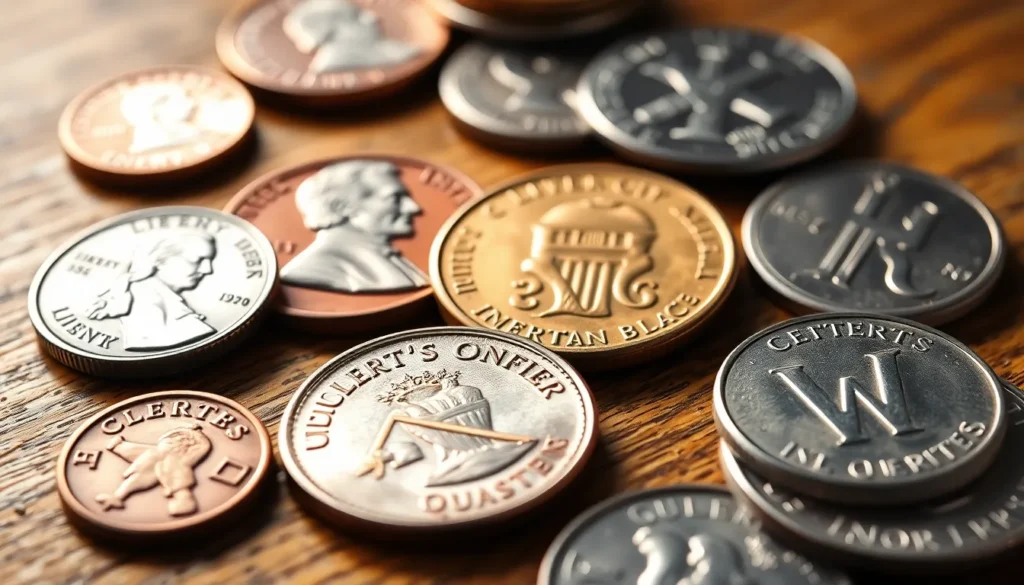
Many modern coins are surprisingly valuable. Understanding the types can reveal potential treasures that might be sitting in pocket change.
Rare Coins
Rare coins often fetch high prices in the collectors’ market. Examples include the 1970-S Lincoln penny, which features a rare proof coin variant. Coins minted in limited quantities or those with historical significance gain popularity among collectors. The 1999 “W” quarter is another noteworthy example, as it represents a unique mintage. Awareness of grading standards plays a critical role when assessing potential values for these coins. Ultimately, the rarity of the coin greatly influences its market demand and price.
Limited Edition Coins
Limited edition coins often capture collectors’ attention due to their unique designs and scarcity. Coins celebrating anniversaries or significant events can be particularly sought after. The 2000 “Transcontinental Railroad” commemorative coin exemplifies this category, as it reflects both historical significance and artistic design. Minted in small numbers, these coins may appreciate quickly once collectors recognize their potential. Collectors frequently pay premiums for coins issued in special releases, enhancing their desirability and market value.
Error Coins
Error coins present unique opportunities for collectors and investors alike. Mistakes during the minting process can result in valuable items, such as double-struck or off-center coins. For instance, the 1983 “dime” plated with copper is notorious for its rarity and high market value. Unintentional errors create an appeal among collectors, as they signify a break from the norm. Seeking these coins can lead to unexpected finds in circulation. Each error coin brings its own story, appealing to those interested in numismatic history.
Factors Affecting Coin Value
Several factors influence the value of modern coins, including their condition, demand, rarity, and market trends. Understanding these elements helps collectors and casual finders recognize coins worth significant amounts of money.
Condition and Grading
Condition plays a vital role in determining a coin’s value. Coins in excellent condition, often referred to as “Uncirculated” or “Mint State,” command higher prices. Grading scales assess the coin’s wear and visual appeal, with professional services evaluating based on specific criteria. Higher grades indicate minimal wear and better preservation, directly impacting value. Collector interest often focuses on coins with fewer blemishes, scratches, or discoloration. Premiums often exist for coins with unique features, enhancing desirability further within the market.
Demand and Rarity
Demand signifies how many collectors or investors seek a particular coin. Rare coins typically generate more interest, increasing their market value. Factors contributing to rarity include limited mintages and historical importance. Well-known examples like the 1970-S Lincoln penny showcase how demand can influence prices significantly. Conversely, high mintage coins usually retain less value due to easy availability. Tracking demand trends allows investors to identify potential opportunities, enhancing profit possibilities when buying or selling.
Market Trends
Market trends significantly affect modern coin values. Economic conditions, collector preferences, and new discoveries play essential roles in the fluctuating values. Changes in public interest can cause coin prices to rise or fall sharply. For instance, commemorative coins experienced increased enthusiasm during significant anniversaries, boosting their value. Auction results also provide insight into prevailing trends, showcasing prices frequently achieved for various coins. Monitoring these trends equips collectors or investors with actionable knowledge for informed decisions.
Where to Buy and Sell Modern Coins
Finding the right place to buy and sell modern coins can maximize potential returns. Various options exist for collectors and investors to connect with reputable sources.
Coin Dealers
Established coin dealers offer a reliable avenue for transactions. They provide expertise and access to a wide range of modern coins, including rare finds and limited editions. Many dealers are members of professional associations, which ensures adherence to best practices. Buyers should consider dealer reviews and credentials before making purchases. Selling to a dealer simplifies the process, but prices may vary based on current market values.
Online Marketplaces
Online marketplaces like eBay and Etsy serve as popular platforms for trading modern coins. Sellers and buyers can browse listings, compare prices, and read customer feedback to make informed choices. Secure payment methods and buyer protections add additional layers of confidence to transactions. Listings often include detailed descriptions and images of coins, helping potential buyers assess quality before purchasing. Additionally, online forums and groups dedicated to coin collecting provide invaluable resources for gathering information and connecting with other collectors.
Coin Shows
Attending coin shows allows collectors to engage directly with dealers and other enthusiasts. These events frequently feature a diverse array of coins, giving attendees the chance to observe and appreciate their potential value. Participants can attend educational seminars, enhancing their knowledge base about the coin market. Networking with other collectors fosters valuable connections that may lead to future buying and selling opportunities. Coin shows also often provide a venue for bidding on auction items, allowing buyers to acquire unique pieces not found elsewhere.
Modern coins can be more than just pocket change; they have the potential to unlock unexpected financial rewards. By understanding the unique characteristics that contribute to a coin’s value, individuals can identify hidden treasures among their everyday currency. Whether it’s a rare coin, a limited edition piece, or an error coin, each category offers distinct opportunities for collectors and casual finders alike.
Staying informed about market trends and the factors that influence coin value can enhance one’s ability to make profitable decisions. With the right knowledge and resources, anyone can embark on a rewarding journey in the world of coin collecting and trading.


