

Managing contacts on an iPhone can feel like herding cats—chaotic and often frustrating. But what if there was a way to organize those contacts into neat little groups? Imagine effortlessly texting your book club, family, or that group of friends who always seem to want to plan a spontaneous getaway. Creating groups in iPhone contacts isn’t just a time-saver; it’s a game-changer.
Understanding Groups in iPhone Contacts
Groups help organize contacts for easier management on an iPhone. Simplifying communication, these groups promote better organization and quicker access.
Benefits of Creating Groups
Creating groups streamlines communication, making it faster to reach multiple people at once. Efficiency improves by sending messages or emails to specific groups, like family or friends, without selecting each contact individually. Organization enhances when contacts are grouped by categories such as work or social clubs, reducing the risk of mixing up numbers. Shared information within groups supports collaboration on projects or events, allowing for effective planning and coordination.
Common Uses for Contact Groups
Contact groups serve various essential functions. Family groups allow for instant communication during gatherings or emergencies. Friends can form separate groups to plan outings or stay connected. Work-related groups facilitate project management, simplifying discussions among team members. Clubs or interest-based groups enable members to share updates quickly. These common uses establish a more organized contact list and improve user experience.
Step-by-Step Guide to Create a Group in iPhone Contacts
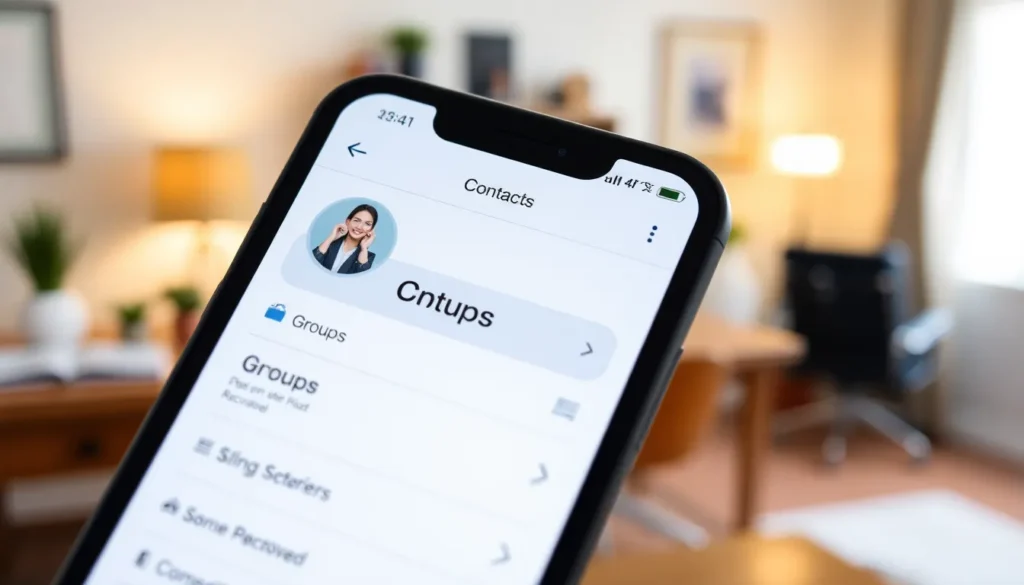
Creating contact groups enhances communication and organization. Follow these steps to establish your groups easily.
Using the Contacts App
- Open the Contacts app on the iPhone.
- Tap Groups in the upper left corner.
- Select New Group at the bottom of the screen.
- Enter a name for your group in the designated field.
- Press Done to create the group.
- Tap the group name, then select Add Members.
- Choose contacts to include, highlighting each one.
- Finish by tapping Done again. This process efficiently organizes contacts.
Using iCloud on a Computer
- Visit the iCloud website on a computer.
- Sign in with your Apple ID.
- Click on Contacts to access your contact list.
- Select the + symbol found at the bottom left.
- Choose New Group from the action menu.
- Name the group explicitly in the text box.
- Drag chosen contacts into the newly created group or select them individually.
- Group management becomes seamless as changes sync to the iPhone automatically.
Managing Your Contact Groups
Managing contact groups enhances organization and communication. Users can easily add or remove contacts as needed to keep groups relevant.
Adding and Removing Contacts from Groups
To add contacts, open the desired group, tap on the “Add Contacts” option, and select individuals. Each selection updates the group instantly. Removing contacts requires selecting the group, tapping on the contact, and hitting “Remove.” Users benefit from updated groups as they can keep their lists concise. Frequent adjustments ensure the group accurately reflects current connections and needs. This flexibility allows for streamlined communication when reaching out.
Editing Group Names
Editing group names provides clarity and personalization. Users can navigate to the group list, select the group they want to edit, and tap on “Edit.” Changing the name updates how the group appears, improving recognition. Clearer names help identify the purpose of each group quickly. Adjustments reflect individual preferences and enhance contact management. Naming groups based on their function simplifies communication practices. Ultimately, personalized group names lead to more effective organization and usability.
Troubleshooting Common Issues
Users may encounter issues when managing their contact groups on an iPhone. Addressing these problems quickly enhances overall efficiency.
Issues with Group Visibility
Sometimes, groups don’t appear as expected in the Contacts app. A common cause involves the grouping feature being turned off. Ensuring that “Show all Contacts” is enabled often resolves this. Users should also check the settings on their Apple devices for visibility preferences. If groups still don’t show up, restarting the Contacts app or the device can refresh the list.
Syncing Problems with Other Devices
Syncing issues may occur when connecting an iPhone to iCloud or other devices. Inconsistent internet connectivity can disrupt the sync process. Verifying network connections typically helps restore synchronization. Users can also check their iCloud settings to confirm that contacts are enabled for syncing. If problems persist, signing out of iCloud and then signing back in often triggers a successful sync of contact groups across devices.
Creating contact groups on an iPhone is a game changer for efficient communication and organization. By taking advantage of this feature users can streamline their interactions and manage their contacts more effectively. Whether it’s for family, friends, or work-related projects, groups simplify the process of reaching out to multiple people at once.
With the step-by-step guide provided users can easily set up and manage their groups, ensuring that their contact lists remain relevant and up-to-date. Troubleshooting tips also empower users to resolve any issues that may arise, making the experience seamless. Embracing contact groups not only enhances communication but also brings a sense of order to the often chaotic world of digital contacts.


